
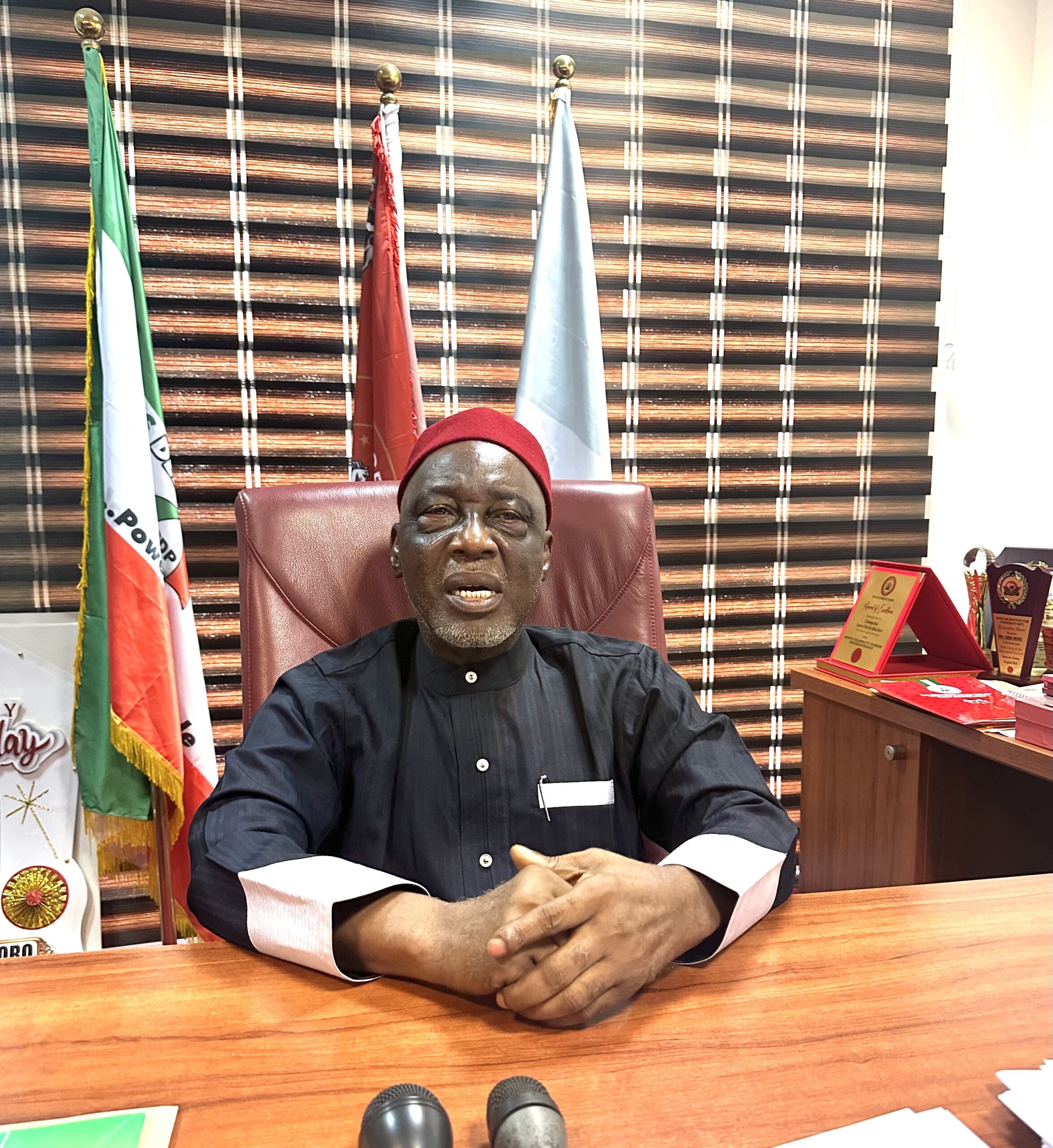

Senate Minority Leader, Senator Abba Moro, has expressed concern over the state of Nigeria’s democracy, saying the country is facing growing political, economic and security challenges despite celebrating another Democracy Day on June 12.
Speaking in an interview ahead of the commemoration, the Benue South senator said while Nigerians should celebrate the survival of democratic governance, many citizens remain dissatisfied with the direction of the nation’s democracy.
According to him, political parties across the country are battling internal crises, litigations and a lack of ideological identity, a situation he said has weakened democratic development.
“Every year that June 12 comes and Nigerians are still in democracy, we have reason to celebrate. But many Nigerians will not agree that our democracy is on the right track,” Moro said.
The lawmaker attributed frequent defections among politicians to the absence of strong ideological commitments within political parties, noting that many politicians now view parties merely as platforms for contesting elections and acquiring power.
Moro also painted a grim picture of the nation’s economy, saying inflation, unemployment and poverty have continued to worsen, leaving many Nigerians struggling to survive.
“Nigerians are hurting. Inflation is on the rise, unemployment is on the rise, poverty is increasing and insecurity is worsening,” he said.
While acknowledging that the Federal Government has introduced reforms aimed at stabilizing the economy, he stressed that such measures must translate into tangible improvements in the lives of ordinary citizens.
He noted that many Nigerians now find it difficult to afford healthcare, education and other basic necessities, warning that the current situation is unsustainable.
On security, the Minority Leader lamented the persistent attacks on communities in Benue State and other parts of the country, describing the violence as a major threat to national stability.
He criticized what he called the government’s reactive approach to insecurity and urged authorities to adopt more proactive measures to prevent attacks before they occur.
Moro also called on state governments to take greater responsibility for protecting lives and property, arguing that governors have access to resources that should be deployed to strengthen local security arrangements.
“The primary responsibility of government is the protection of lives and property. State governments must take responsibility and be more proactive in addressing insecurity,” he said.
Assessing the performance of the 10th Senate as it approaches its third anniversary, Moro said the upper chamber has recorded notable legislative achievements, including the consideration of hundreds of bills, motions and budget proposals.
According to him, about 844 bills have been introduced in the Senate, with 96 passed and more than 50 already signed into law.
Despite criticisms of the National Assembly, he maintained that the Senate has continued to fulfill its constitutional responsibilities through lawmaking, oversight and representation.
Looking ahead to the 2027 general elections, Moro dismissed concerns about opposition to his re-election bid, expressing confidence that his record of performance would earn him another term in office.
He cited various constituency projects across Benue South, including road construction, bridges, healthcare facilities, water projects, rural electrification schemes and educational interventions.
“I have not finished with my people yet, and my people have not finished with me,” he said.
The senator urged Nigerians to remain hopeful despite the country’s challenges, describing nation-building as a continuous process that requires patience, commitment and collective effort.
“We are not where we are supposed to be, but we must keep hope alive and believe that the efforts being made today will eventually yield results,” Moro stated.
