
Senate Raises Alarm Over Revenue Gaps in Livestock Agencies
…Seeks Improved Accountability, Warns Against Revenue Leakages

The Senate Committee on Livestock Development has raised concerns over gaps between the revenue-generating potential of agencies under the Federal Ministry of Livestock Development and the revenues they report, calling for improved accountability and financial management.
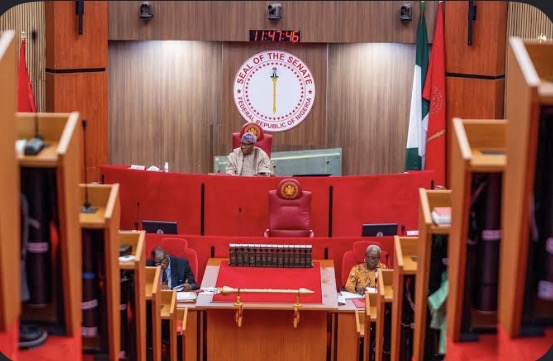
Deputy chairman of the committee, Senator Abdul Ningi, made this known on Tuesday during an interactive session with agencies under the Ministry at the National Assembly in Abuja.
Ningi said the committee was concerned that some agencies engaged in revenue-generating activities were not accounting adequately for the financial resources arising from their operations.
He listed tuition and other student-related fees, annual dues, professional registration and certification fees, grants, research activities, laboratory services, consultancy and technical services as potential sources of revenue for the institutions.
According to him, properly harnessing these revenue streams could strengthen the financial capacity of the agencies, improve service delivery and reduce excessive dependence on government funding.
He, however, noted that concerns had persisted over the adequacy of existing revenue collection mechanisms, the completeness of financial reports and whether funds generated by the agencies were properly documented and accounted for.
The Senator explained that the proposed oversight exercise would enable the committee to assess the operational realities, financial conditions, revenue streams and institutional challenges facing the agencies.
He said the exercise would also determine whether available resources were commensurate with their statutory responsibilities and whether their revenue collection and management systems were efficient, transparent and effective.
Ningi stressed that the exercise was not intended to intimidate any agency or create an atmosphere of suspicion, describing it instead as a fact-finding and institution-building initiative aimed at identifying gaps and addressing weaknesses.
He emphasised the importance of livestock-related institutions to national food security, public health and economic growth, noting that their responsibilities required adequate funding, modern infrastructure, qualified personnel and efficient administrative systems.
“The Committee recognises the critical role these agencies will play in advancing large-scale development. The contribution of the Committee resides in animal health, the use of evidence, and control of operational regulations, manpower development, animal protection, and environmental services actions are essential to national food security, public health, economic growth, and the realisation of the current government’s livestock development objectives.
“We as the committee equally recognise these and other responsibilities, and cannot be immediately discharged without adequate funding and financial management”, he stated.
The Committee’s deputy chairman said the oversight visits would provide an opportunity to examine the revenue profiles of the agencies, the volume of funds generated, collection procedures, the adequacy of financial records and compliance with applicable treasury and financial regulations.
“Subsequently, therefore, the oversight tour will provide an opportunity to examine the practical profile of such agencies, the substance and volume of inter-agency financial revenue, the process of collection, and the agencies, the adequacy of financial records, and compliance with applicable treasury and financial regulations.
“We will also try to identify potential revenue leakages or weaknesses in internal control, and reduce administrative bottlenecks and opportunities for the food-delivering organisation”.
He added that the committee would seek to identify potential revenue leakages, weaknesses in internal controls and administrative bottlenecks that could undermine the effective management of public resources.
Ningi urged members of the committee and officials of the agencies to approach the exercise with a shared commitment to improving efficiency and reducing revenue leakages.
He also assured the agencies that the committee was not a court of law but a partner operating within the provisions of the Nigerian Constitution.
The Senator called for openness, cooperation and shared responsibility, expressing hope that the committee’s work would establish administrative mechanisms capable of improving institutional performance beyond its tenure.
The interactive session was held to discuss the scope and modalities of the planned oversight visits and secure the cooperation of the agencies in the committee’s efforts to strengthen accountability and financial management across the livestock development sector.
