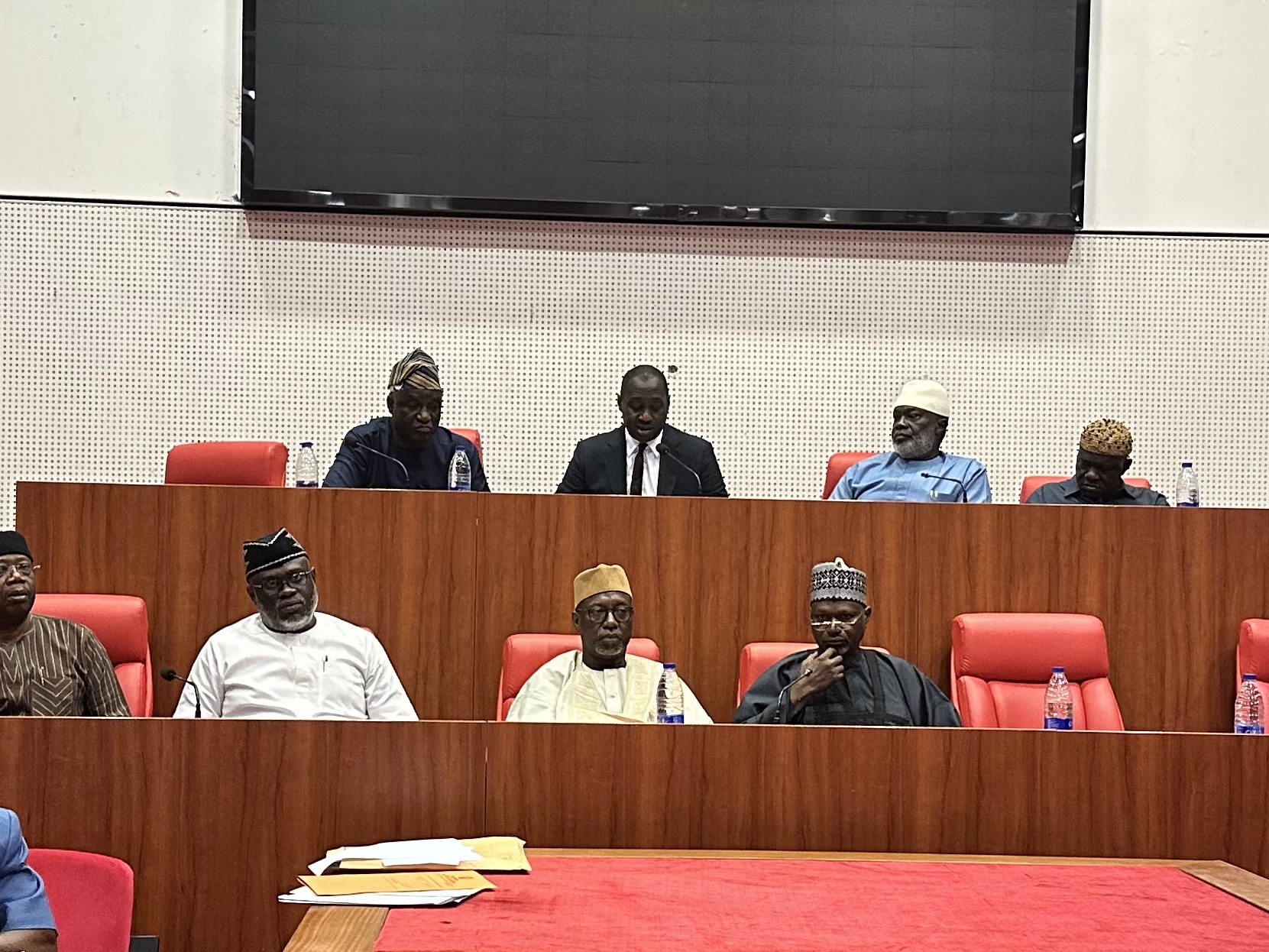

The Senate Committee on Gas has resolved to invite the Group Chief Executive Officer of the Nigerian National Petroleum Company Limited (NNPCL) and the Managing Director of Chevron to appear before it on December 1, 2026, over their failure to attend its investigative hearing on the export of Liquefied Petroleum Gas (LPG) amid domestic shortages.
Senator Jarigbe Agom Jarigbe disclosed this while speaking with journalists after the committee’s hearing, saying the Senate was determined to establish the circumstances surrounding the continued export of LPG despite inadequate supply to the Nigerian domestic market.
He described the absence of the two officials as confrontational to the Parliament, stressing that the committee would not relent in its efforts to establish accountability and protect the interests of Nigerians.
According to him, the committee will investigate revenues generated from LPG exports from 2023 to date, including the repatriation of proceeds from the exports into the Consolidated Revenue Fund.
“We are still investigating, so we don’t know if there is a conspiracy. But we are going to look at the revenues generated from the exported LPG from 2023, 2024 to date, and then we are going to look at the repatriation of the funds because they are exported to the Consolidated Revenue Fund.
“We are interested in that, and moving forward, we want to make sure that LPG is supplied to the domestic market for the good of the common man,” he said.
On concerns that Nigerians continued to experience high cooking gas prices despite the Federal Government’s removal of petroleum subsidy, Jarigbe said the committee was working towards addressing the supply challenges responsible for the rising cost of LPG.
He explained that adequate domestic supply in response to demand would naturally reduce prices, adding that the Senate was committed to ensuring that Nigerians were not subjected to unnecessary hardship.
“We are really working for Nigerians here, for our people, and that is why we want to get to the roots of it and make sure that the price of gas goes down because when there is adequate supply in response to demand, the price will naturally go down,” he said.
The senator also addressed explanations offered by industry operators regarding the propane-to-butane ratio of LPG exported from Nigeria.
He said operators had cited an 80:20 ratio of propane to butane as the reason for exporting the product, arguing that the composition could be adjusted through blending to meet domestic consumption requirements.
According to him, the appropriate arrangement for local consumption should be 80 per cent butane and 20 per cent propane.
Jarigbe further expressed concern over the reported exclusion of the Standards Organisation of Nigeria (SON) from the process of enforcing quality standards, describing the development as an administrative flaw.
He said the committee’s decisions were partly aimed at addressing such lapses and ensuring that relevant government agencies were involved in regulating the sector.
The senator reaffirmed the committee’s determination to ensure that LPG produced in Nigeria adequately serves the domestic market, in line with the Federal Government’s policy objectives and the need to make cooking gas affordable for ordinary Nigerians.
He also referenced President Bola Tinubu’s Executive Order 9, saying the Senate was committed to enforcing measures designed to ease the economic burden on Nigerians.
