
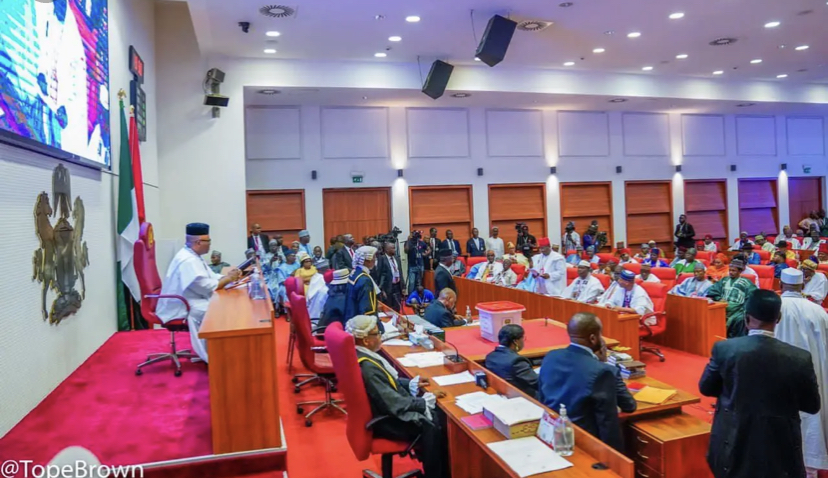

The Nigerian Senate have expressed concern over technical challenges affecting the ongoing 2026 Unified Tertiary Matriculation Examination (UTME), conducted by the Joint Admissions and Matriculation Board (JAMB), even as they acknowledged improvements in the exercise nationwide.
The lawmakers, who were on an oversight visit to monitor the examination, noted that over two million candidates are participating in this year’s UTME across the country.
While commending the level of security and general coordination at many Computer-Based Test (CBT) centres, the Senate committee chairman, senator Dandutse Muntari highlighted persistent technical issues, particularly at the Good Success Centre in Abuja, where disruptions were recorded over consecutive days.
According to Dandutse, although technical faults can occur, repeated glitches during examinations create undue stress for candidates and may affect their performance.
“As a committee, we are satisfied with the security arrangements in most centres, but these technical issues must be addressed before examinations begin,” the Lawmaker stated.
The committee disclosed that it has directed JAMB to take urgent corrective measures and assured that a comprehensive review of the board’s operations would be carried out to prevent a recurrence.
They stressed that no candidate should be denied the opportunity to sit for the examination due to system failures, especially after traveling long distances.
The lawmakers also reaffirmed the importance of the UTME as a key pathway to tertiary education, citing cases of working professionals, including military personnel, sitting for the examination to improve their qualifications.
Responding to the concerns, JAMB’s Public Communication Adviser, Fabian Benjamin explained that the UTME is not internet-based but operates on a secured local server system, where questions are preloaded and distributed across terminals within each centre.
Benjamin noted that while the system is designed to prevent examination malpractice through the use of item banks and randomized questions, technical issues such as hardware faults or connectivity within local networks can still disrupt the process.
On complaints about candidates arriving late, JAMB officials emphasized that biometric screening is a critical security step, and once missed, candidates may not be allowed to sit for the exam unless the delay is caused by system failure.
However, he assured that candidates affected by technical disruptions would be rescheduled and given another opportunity to write the examination.
During the visit, some candidates and parents expressed frustration over delays and uncertainty. One candidate raised concerns about losing examination time due to system interruptions, while a parent described the situation as “massive challenges” after returning to the centre for a rescheduled session.
The committee observed that activities proceeded
smoothly at centres including Ansar- Ud-Deen International School, Maitama, as well as facilities in Government Secondary School, Tundun Wada.
However, the exercise was not without setbacks, as protests broke out at the Good Success CBT Centre in Utako, Abuja, where students and parents complained of technical glitches that
prevented candidates from writing
their examinations.
The lawmakers sought immediate remedies, including the possibility of resetting affected sessions to ensure fairness for all candidates.
They further directed that officials remain on ground to monitor developments and report progress, with a view to escalating unresolved issues to higher authorities.
Despite the setbacks, both the lawmakers and JAMB officials urged candidates to remain calm, assuring them that no registered candidate would be denied the opportunity to sit for the examination.
