

The Director-General of the Nigeria Centre for Disease Control and Prevention (NCDC), Dr Jide Idris, has identified inadequate funding, shortage of skilled personnel, poor infrastructure and logistical constraints as major challenges confronting Nigeria’s efforts to prevent and respond to infectious disease outbreaks.
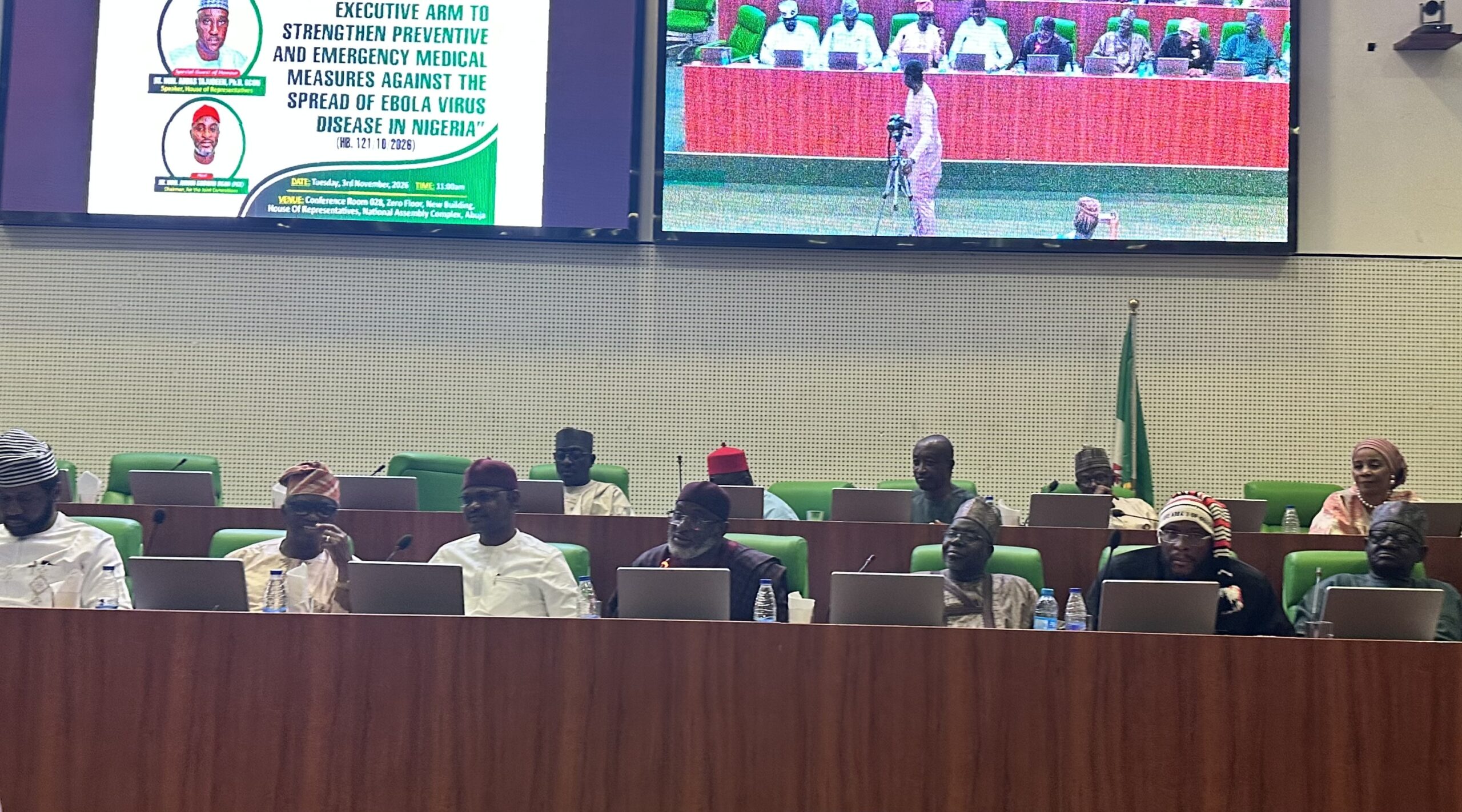
Idris disclosed this while speaking with journalists after a one-day public hearing organised by the House of Representatives Joint Committees on Infectious Diseases, Healthcare Services, Aviation and Interior on the need for the Executive to strengthen preventive and emergency medical measures against the spread of Ebola Virus Disease in Nigeria.
He described the public hearing as productive, noting that it provided an opportunity for lawmakers to understand the country’s disease prevention capacity, existing challenges and areas requiring urgent government intervention.
According to him, the engagement was also important in highlighting the need to address other infectious diseases confronting the country, beyond the threat of Ebola.

“The meeting went very well. I think they were trying to seek information on the status of the disease in this country and the challenges we face in managing and preventing communicable diseases,” he said.
Idris stressed that Nigeria must adopt a broader public health approach, explaining that the operational mechanisms used in responding to Ebola outbreaks could also be adapted to tackle other infectious diseases.
He expressed optimism that the lawmakers’ engagement with relevant stakeholders would translate into legislative and institutional support for strengthening the country’s disease surveillance and response system.
Highlighting the challenges, the NCDC chief identified inadequate funding of the public health system as a major concern, arguing that greater attention must be given to preventive healthcare rather than concentrating largely on clinical interventions.
He said although no country could adequately fund every aspect of its healthcare sector, Nigeria must prioritise public health financing to strengthen its capacity to prevent and contain disease outbreaks.
“One of the challenges is funding. We must take seriously the funding of the public health system. We tend to concentrate on clinical decisions, but we also need to pay attention to public health funding,” he said.
The NCDC director-general also identified shortages of skilled personnel, particularly those responsible for national health security, as another significant challenge.
He explained that personnel involved in disease surveillance, outbreak investigation and emergency response require specialised capabilities different from those of conventional hospital workers.
According to him, the welfare and working conditions of such personnel must be adequately addressed, considering the risks they face in the course of protecting public health.
Idris further listed logistics and inadequate infrastructure among the constraints affecting effective disease prevention and emergency response.
He, however, emphasised the need to strengthen disease prevention and response capabilities at the subnational level, urging state governments to take greater responsibility for public health security within their jurisdictions.
He noted that an effective national disease response system would require stronger collaboration between the Federal Government, state governments and relevant health institutions.
The public hearing was convened to examine measures required to strengthen Nigeria’s preparedness and emergency response mechanisms against Ebola and other potential infectious disease outbreaks.
