
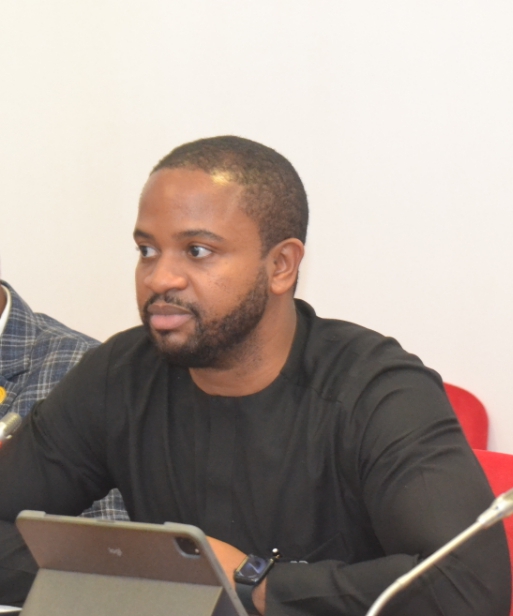

The Managing Director of the South-East Development Commission (SEDC), Mr. Mark Okoye, has reaffirmed the Commission’s commitment to transforming the South-East into a $200 billion economy within the next decade, while seeking Senate approval of a N140 billion 2026 budget to commence full implementation of its regional development blueprint.
Speaking during the Commission’s budget defence before the Senate Committee on South-East Development Commission, chaired by Senator Orji Kalu, Mr. Okoye described the engagement as “a rich and constructive encounter,” emphasizing that the Commission has spent its first year building a solid foundation for long-term regional transformation.
He expressed profound appreciation to President Bola Ahmed Tinubu for establishing the Commission in 2024, noting that the creation of the SEDC fulfilled over five decades of advocacy by stakeholders across the South-East. He also commended the National Assembly for its legislative leadership in drafting and passing the enabling law.
Building the Foundation
According to the Managing Director, the Commission’s 2025 activities focused on:
– Developing a comprehensive regional roadmap
Conducting extensive stakeholder engagement
– Meeting over 100 federal government agencies
– Engaging academia, civil society, diaspora groups, development finance institutions, and private sector actors
– Hosting the Southeast Vision 2050 Forum with participation from the five South-East governors, the Vice President, and thousands of stakeholders
“These engagements allowed us to build the right execution platform before deploying large-scale capital projects,” he stated.
*Budget Breakdown and Immediate Action*
Mr. Okoye disclosed that the proposed N140 billion 2026 budget allocates approximately 73–74% to capital expenditure, with the remaining portion covering personnel and overhead costs.
He emphasized that beyond long-term projections, the Commission has outlined a clear 100–120 day action plan, which includes:
– Activation of regional operational structures
– Launch of a Southeast Venture Capital Programme
– Operationalization of the Southeast Investment Company
– Commencement of agriculture development initiatives
– Rollout of grassroots sports infrastructure programmes
Responding to concerns raised by lawmakers about immediate infrastructure needs, the MD clarified that SEDC’s mandate is to address region-wide strategic infrastructure in alignment with presidential directives.
“The President was clear — development commissions must solve region-wide infrastructure challenges and work in harmony with state and local governments,” he said.
He noted that while certain responsibilities lie with state and local governments, SEDC’s role is to implement transformative projects that serve the entire region, such as reference health facilities, rail connectivity, gas pipelines, and coordinated energy and security architecture.
*Alignment with National Agenda*
Mr. Okoye stressed that the Commission’s blueprint aligns strongly with President Tinubu’s Renewed Hope Agenda and reflects consistent feedback from governors, senators, and other regional stakeholders.
He highlighted that the Commission’s approach prioritizes sustainability and institutional strength:
“We recognize that we are the pioneer team. How we build this Commission today will determine how effectively future leadership can use it as a vehicle for regional prosperity.”
*Legislative Oversight and Transparency*
Members of the Senate Committee cautioned against mismanagement and stressed the need for transparency and focus on legacy projects. Senator Tony Nwoye emphasized investment in schools and hospitals over costly conferences, while Senator Patrick Ndubueze urged focus on legacy projects such as a reference hospital for the region.
Chairman of the Committee, Senator Orji Kalu, reaffirmed the Senate’s commitment to oversight and accountability, noting that the economic development of the South-East remains a national priority.
