
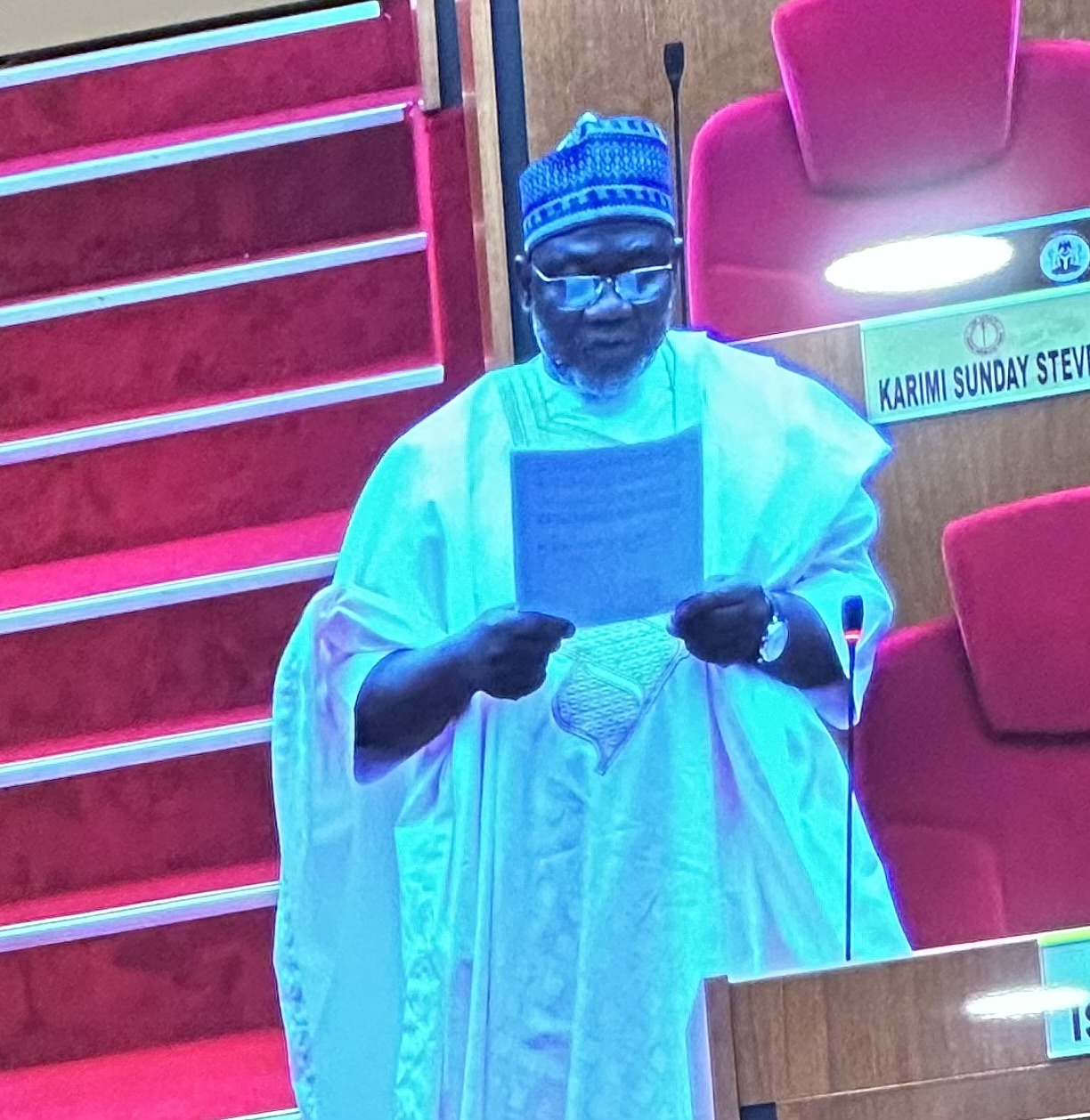

The Senate has backed a motion sponsored by Senator Isah Jibril, calling for an end to the prolonged holding of commercial aircraft in Nigerian airspace to accommodate Very Important Persons (VIPs) and other security-related movements.
The lawmakers expressed concern that the practice, which reportedly keeps commercial aircraft airborne for extended periods while landing operations are suspended, poses serious risks to passenger safety, aircraft crews and the overall efficiency of the aviation sector.
Consequently, the Senate urged the Nigerian Civil Aviation Authority (NCAA), Nigerian Airspace Management Agency (NAMA), Federal Airports Authority of Nigeria (FAAN) and Nigerian Safety Investigation Bureau (NSIB) to strengthen operational coordination and ensure that commercial flights are not exposed to unnecessary risks arising from VIP movements.
The resolution followed a motion sponsored by Senator Jibril, who warned that prolonged holding patterns could result in excessive fuel consumption, reduced operational reserves and increased exposure to adverse weather conditions, air traffic congestion and limited diversion options.
Presenting the motion during plenary, Jibril stressed that passenger safety and the protection of aircraft crews remained fundamental to the reliability and economic viability of air transport.
He explained that commercial aviation depended on carefully coordinated schedules involving aircraft departures and arrivals, fuel planning, crew duty-time limitations, passenger connections, airport operations and air traffic management.
The senator argued that foreseeable airport restrictions arising from VIP movements should be managed through ground delays, revised departure slots and proper flight sequencing rather than allowing aircraft to take off only to remain airborne while awaiting clearance to land.
He also observed that international flights scheduled to land at Nigerian airports sometimes divert to alternative airports within the country when access to their intended destinations is temporarily restricted.
Contributing to the debate, Senator Diket Plang, representing Plateau Central, described the situation as a failure of operational coordination, recalling his experience working with an airline as a station manager.
Plang argued that aviation authorities should be able to coordinate flight schedules with anticipated VIP movements to prevent commercial aircraft from departing when their destinations may become temporarily inaccessible.
He warned that aircraft operate under strict fuel and safety regulations, stressing that poor airspace management could lead to avoidable disasters.
The senator described an aircraft as a potential flying coffin once airborne, noting that pilots have limited options when confronted with unexpected operational challenges.
Also contributing, former Senate Majority Leader, Senator Abdul Ningi, representing Bauchi Central, described the situation as a recurring national problem and accused aviation regulatory agencies of failing to adequately discharge their supervisory responsibilities.
Ningi recalled an experience in which a flight from Kano, ordinarily expected to last about 40 minutes, reportedly took two and a half hours because of delays associated with VIP movements.
He said passengers frequently endured prolonged delays without knowing where to direct their complaints or which authorities were responsible.
The former Senate Majority Leader called for a public hearing involving the heads of NCAA, NAMA and FAAN to explain their capacity to coordinate commercial flight operations with VIP movements.
He also questioned the extension of special aviation privileges to individuals outside the President and Vice-President, arguing that Nigerians deserved clarity on those entitled to such arrangements.
The President of the Senate, Godswill Akpabio, who supported the motion, recalled an incident during his tenure as governor when passengers were kept inside a bus for about three hours because of a VIP movement.
Akpabio said the passengers became frustrated and directed their anger at the government, while he had to conceal his identity to avoid being recognised.
He observed that poor coordination sometimes resulted in airports being closed long before the arrival or departure of the VIP concerned, leaving commercial aircraft already airborne to circle for extended periods.
The Senate President warned that such delays could expose aircraft to changing weather conditions and fuel-related emergencies, particularly where airlines had not made adequate fuel provisions.
He, however, cautioned against attributing any particular aircraft accident to VIP movements without the findings of the relevant accident investigation.
Akpabio maintained that the Senate was not targeting any individual or government but seeking improved coordination among aviation authorities to prevent avoidable loss of lives.
He stressed that where restrictions were anticipated, airlines should be informed at their departure points so that flights could be appropriately delayed instead of allowing aircraft to take off and subsequently remain airborne for extended periods.
During deliberations, Senator Binos Dauda Yaroe proposed the inclusion of the Nigerian Safety Investigation Bureau in the Senate’s resolutions to strengthen efforts towards improving aviation safety.
The amendment was supported by Senator Neda Imasuen, representing Edo South, and adopted by the Senate.
Imasuen subsequently proposed an additional resolution urging aviation authorities to ensure that aircraft operators consider alternative airports for emergency landings rather than remaining airborne for prolonged periods when their intended destinations are temporarily inaccessible.
The proposal, seconded by Senator Kaka Shehu Lawan, was also adopted.
Akpabio further directed the Senate Committee on Aviation to immediately convene a meeting with the relevant aviation authorities to examine the issues and develop practical solutions.
He said the meeting should establish the number of individuals entitled to VIP-related airport restrictions and determine the procedures governing such movements.
The Senate consequently mandated the Committee on Aviation to interface with the NCAA, NAMA, FAAN and NSIB to ensure strict compliance with its resolutions and report back within two weeks.
The lawmakers stressed that the intervention was necessary to strengthen aviation safety, improve accountability and prevent avoidable loss of lives.
